
Rewiring R&D in Brazil & Europe: Lessons from 2 weeks of industry dialogues
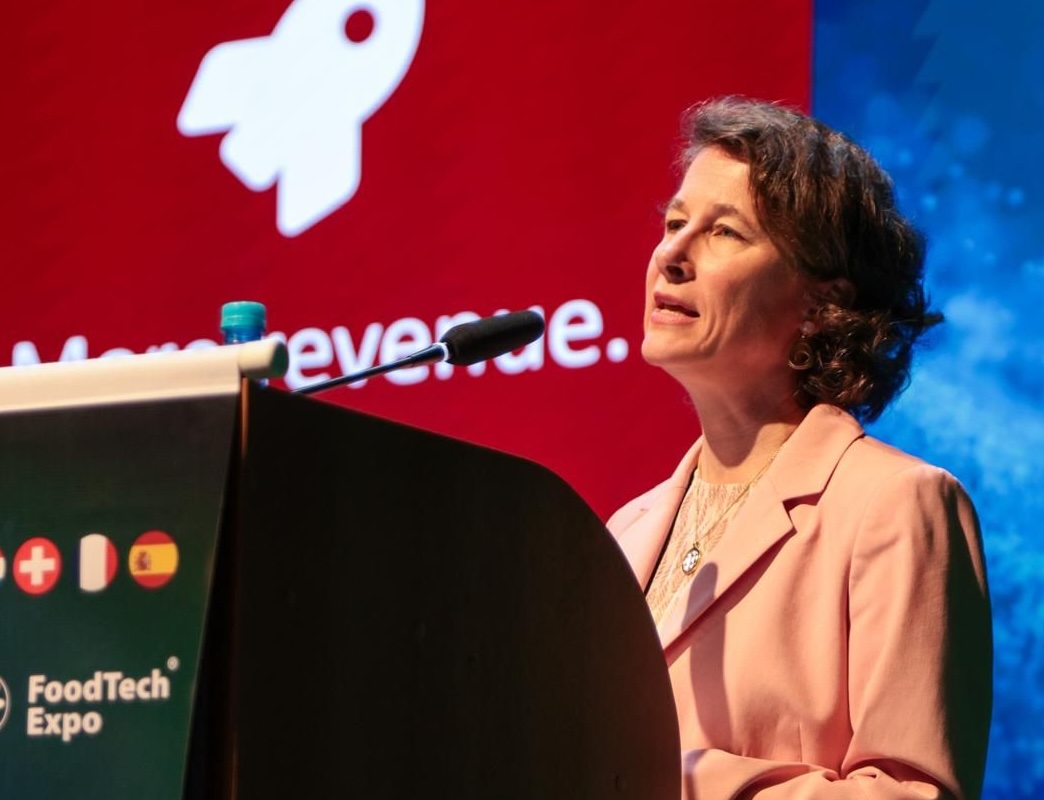
By Miriam Ueberall, Europe Strategy Head, Turing Labs
Europe is sitting on decades of R&D knowledge and struggling to unlock it. Brazil is sitting on the world’s most extraordinary biological diversity and racing to make it computable. Two very different starting points — and yet in both environments, organizations that understand the value of AI are still struggling to make it work where it matters most, with their most valuable assets trapped.
Lessons from Europe: Execution is the only conversation that matters
At the 11th edition of F&A Next in Wageningen, Netherlands, AI was a prominent theme. Lots of great ideas and sharing of opportunities — and my personal concern that we are still stuck in “pilot purgatory” within the food & agriculture industry.
I was invited to sit on two panels: one on how AI is transforming the food system end to end, the other a fireside on whether AI can rewrite the rules of flavor. The same common message ran through both: the technology is moving far faster than the industry adopting it.
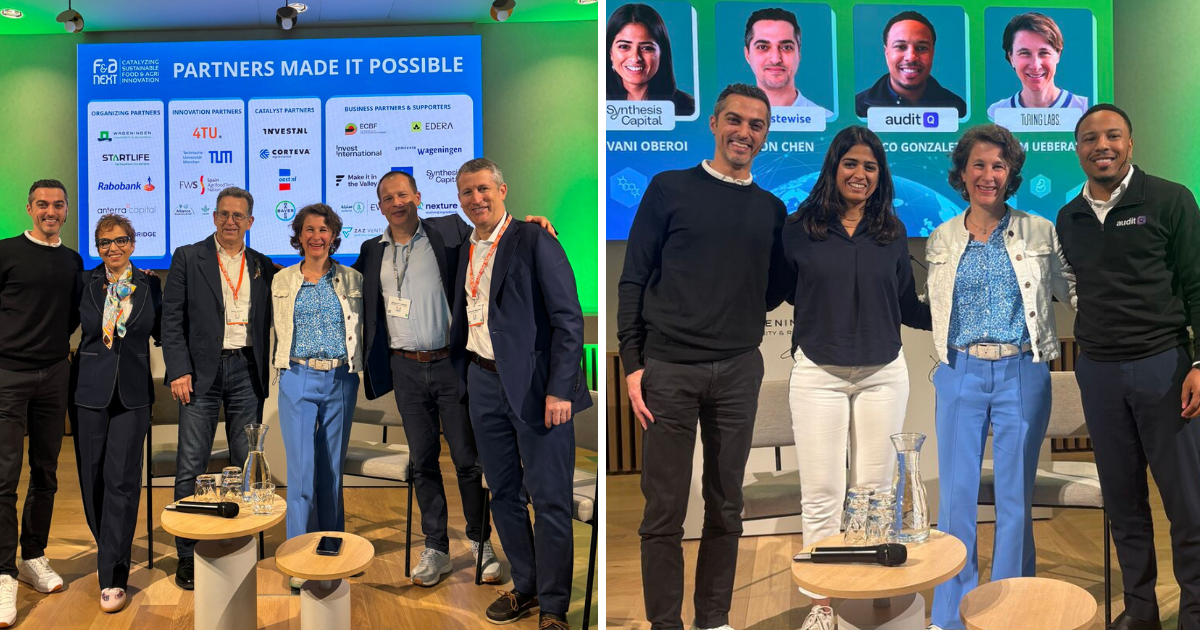
The first panel brought together three players from across the food value chain: Alon Chen from Tastewise (trends and insights), Yelco Gonzalez from AuditQ (compliance), and myself representing Turing Labs and R&D, nicely moderated by Shivani Oberoi of Synthesis Capital. Consumer signals already operate with mature data tools. Compliance automation could have an immediate, measurable ROI — a single missed regulation can easily cost a company six figures or more.
R&D, meanwhile, is yet to be unleashed. The function carries significant operational complexity while receiving limited investment. Having spent 25+ years as an R&D executive at major global Food CPGs, I’ve lived this reality. Today’s R&D teams are expected to simultaneously manage cost pressures, ingredient volatility, reformulation cycles, regulatory constraints, and innovation pipelines — through fragmented systems that still rely heavily on manual coordination and traditional trial and error approaches.
R&D budgets don’t stall because leaders lack ambition. They stall because inefficiency is invisible. If you can’t quantify the drag, you can’t justify fixing it. Nearly 30% of time-to-shelf delays have nothing to do with the science. They come from friction: waiting for internal decisions, scope creep, last-minute compliance hurdles, and knowledge that exists somewhere in the organization but is inaccessible when needed. I’ve seen exactly how decades of formulation intelligence sits in disconnected Excel files buried in shared drives, invisible to others, who then start reinventing the wheel from scratch….
Meanwhile the technology is moving fast. At Turing Labs we are in a position to launch new capabilities on a weekly basis. Many corporate organizations are still stuck overcoming expensive legacy systems that have yet to deliver a return.
Agility is a moat, but not the only one
Alon made a point I agree with: in a world where foundation models improve every quarter, agility is the closest thing to a durable competitive advantage. The company that adapts fastest — not necessarily the one with the most sophisticated model today — wins.
I’d take that one step further. The real moat is what the system learns over time that nobody else can replicate: proprietary formulation data, workflow intelligence from thousands of R&D decisions, and algorithms built for the actual complexity of product development. Generic LLMs generate generic outputs. They cannot reproduce years of domain-specific learning embedded into a platform over time. This is precisely how Turing Labs was built. Our platform doesn’t just apply AI to R&D, it compounds intelligence with every formulation, every decision, every outcome. That advantage gets stronger with every use and can’t be copied from the outside.
The flavor fireside chat reinforced this from a different angle. As Yair from MFL put it: every food company should have a chef at the leadership table. The disconnect between culinary intuition and R&D process explains why so many product launches miss on taste — and taste is, in the end, why people eat. I’d extend that: every food company needs someone at the leadership table who genuinely understands what R&D requires to move faster, and has the authority to build it.
Beyond Technology: What it actually takes
Failures matter. Asking what didn't work, and why, is how organisations build real institutional knowledge. Within our industry we are used to celebrate launches, and unfortunately ignore the learnings along the way.
A policy panel moderated by Rens de Jong brought together Annick Verween of VIB's Biotope accelerator, Michiel Scheffer as President of the European Innovation Council, and Dan Harburg of Anterra Capital. The core tension they discussed was that aligned policy is not a nice-to-have, and most companies still lack a technology roadmap tied to commercial outcomes. Scheffer's push for a more “European club feeling” in agrifood funding rounds was pointy My personal take from that panel: "Stop loving your technology and start loving the problem someone is willing to pay for.".
Thus partnerships are the final piece. The companies making real progress are almost never doing it alone. At Turing Labs, active partnering is core to how we operate — because the ecosystem only learns faster when the players in it are genuinely connected.
Lessons from Brazil: The abundance, bottlenecks, and how AI can be the connecting tissue
After great discussions in the Netherlands off to further rich and insightful days in Campinas in Brazil — a place I know well from various business trips over the years.
Brazil produces 288 million tons of food, exports to 190 countries, and in 2025 alone invested R$41 billion in its food industry — 65% of it directed toward technology and innovation. One speaker joked that only the UN and FIFA reach more countries. The framing I took away: Brazil shouldn’t just be the breadbasket of the world. It can become the supermarket, the biotech lab, and the bioeconomy engine of the world.
What intrigues me about Brazil is the ability to leapfrog: limited stiff legacy systems to worry about, a great mindset and entrepreneurial thinking. This will set the country and broader geography up to play a real role in driving impact and developing relevant solutions for the food and biotech industry.
.png)
Several panel discussions brought this to life. AI changes the risk equation for biotechnology entirely — adding predictability, reducing unnecessary experimentation, and helping the industry absorb biotech solutions faster. Lots of real momentum in biotech across Latin America.
Link that boost in biotech opportunities to Brazil’s biodiversity: biological diversity has always generated “silent information” that we can now, for the first time, begin to interpret at scale. The companies that make that biodiversity computable by connecting ingredient sourcing, formulation performance, sustainability claims, and supply chain resilience will be at the forefront of change and innovation.
Brazil has both abundance and bottlenecks. The biodiversity, the scientific talent, the industrial scale, the entrepreneurial energy are strong. And yet the ecosystem still needs better data infrastructure, regulatory modernization, and stronger bridges between science and industry. That gap is exactly where AI matters and acts as the connective tissue that helps a complex ecosystem learn faster.
A Direct Word to the R&D Executive Reading This
If you recognize yourself in any of what I’ve described, my advice is this: stop waiting for the perfect AI strategy and start building institutional memory now.
Organizations building that foundation today will have a compounding learning advantage in 18 months that late movers will find very hard to close.
This is exactly what Turing Labs was built for. Our platform is not a generic AI layer sitting on top of your workflows — it’s a domain-trained system. It learns from every scientific decision, brings your organization’s knowledge to the surface when you actually need it, and highlights unrealized opportunities you’d otherwise miss. Instead of scattered R&D data, you get predictive intelligence.
Every R&D leader wants the same three things: fewer blind trials, faster cycles, and real confidence before scale-up. That’s exactly what we deliver. And with every experiment, Turing’s system learns, transforming everyday routine work into a compounding competitive advantage.
From the R&D archives of European CPGs to the untapped biodiversity of the Brazilian ecosystem, the world’s next food breakthroughs just need a system smart enough to find them. If you’re ready to move from pilot to implementation and want a partner who understands firsthand what R&D transformation actually looks like from the inside, I’d like to have that conversation.
About the author(s)
Miriam Ueberall brings 25 years of experience leading R&D at some of the world's most recognized CPG companies — including Unilever, Kraft Heinz, andFlora Food Group — rising to Chief R&D Officer before moving into strategy and applied AI. She is one of the industry's most respected voices on what modernR&D transformation looks like in practice. Follow her on LinkedIn.